
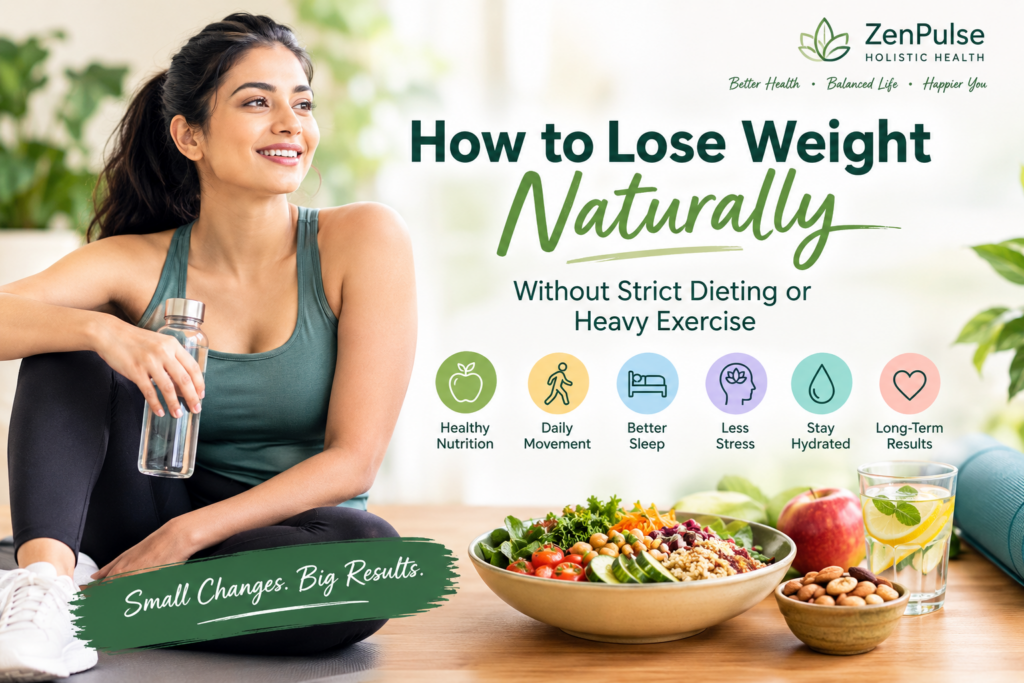
How to Lose Weight Naturally Without Strict Dieting or Heavy Exercise
Primary Keyword: how to lose weight naturally
Secondary Keywords: natural weight loss, healthy weight loss, sustainable weight loss, lose weight without dieting, lifestyle changes for weight loss
SEO Title: How to Lose Weight Naturally Without Strict Dieting or Heavy Exercise
Meta Description: Learn how to lose weight naturally with balanced nutrition, daily movement, better sleep, stress management and sustainable lifestyle changes—without extreme diets or heavy exercise.
Introduction
If you are searching for how to lose weight naturally, you may have already tried strict diets, skipped meals or difficult workout routines.
But healthy weight management does not have to mean starving yourself or spending hours in the gym.
A sustainable approach focuses on your complete lifestyle—nutrition, movement, sleep, stress, eating habits and consistency.
At ZenPulse Holistic Health, we believe that weight management should focus on overall wellbeing rather than only the number on the weighing scale.
What Does Natural Weight Loss Mean?
Natural weight loss means developing healthy habits that support your body without relying on extreme diets, unverified supplements or quick-fix solutions.
A healthy lifestyle can include:
- Balanced and nutritious meals
- Adequate protein and fibre
- Regular physical activity
- Good-quality sleep
- Stress management
- Adequate hydration
- Mindful eating
- Consistent daily habits
Your individual needs can vary depending on your age, health, lifestyle, activity level, medications and dietary preferences.
10 Ways to Lose Weight Naturally
1. Eat Balanced Meals
You do not necessarily need to eliminate carbohydrates, fats or your favourite foods to manage your weight.
Instead, focus on creating balanced meals containing:
- Protein
- Vegetables and other fibre-rich foods
- Appropriate carbohydrate sources
- Healthy fats
Protein sources may include lentils, beans, eggs, dairy, tofu, fish or chicken, depending on your preferences.
The goal is not simply to eat less. It is to improve the quality and balance of your overall diet.
2. Avoid Extreme Diets
Crash diets may promise fast results, but highly restrictive eating can be difficult to maintain.
Instead of following a diet for a few weeks, develop eating habits that you can realistically continue for months and years.
Consistency is more sustainable than extreme restriction.
3. Practise Mindful Eating
Weight management is not only about what you eat. How you eat matters too.
Try to:
- Eat slowly
- Reduce distractions during meals
- Notice hunger and fullness
- Identify emotional eating triggers
- Avoid automatically eating when bored or stressed
Before eating, ask yourself:
“Am I physically hungry, or am I eating because I am stressed, tired or bored?”
This simple awareness can help you understand your eating patterns.
4. Increase Everyday Movement
You do not need to spend hours in a gym to become more active.
Depending on your health and fitness level, movement can include:
- Walking
- Yoga
- Stretching
- Cycling
- Dancing
- Household activities
- Strength exercises
- Taking regular movement breaks
If you currently have a sedentary lifestyle, start gradually and build your activity over time.
Can You Lose Weight Without Heavy Exercise?
You do not necessarily need intense workouts for a healthier lifestyle. However, regular physical activity is valuable for cardiovascular health, muscle strength, mobility and overall wellbeing.
Choose movement that is appropriate for your body and sustainable for your lifestyle.
5. Include Protein and Fibre
Protein and fibre are important components of a balanced diet.
Protein helps maintain body tissues, including muscle, while fibre supports digestive health and can contribute to feelings of fullness.
Include foods such as:
- Vegetables
- Fruits
- Lentils and beans
- Whole grains
- Nuts and seeds
- Eggs, dairy, tofu, fish or other protein sources
The appropriate amount depends on your individual nutritional needs.
6. Prioritise Sleep
Sleep is often overlooked when people think about weight loss.
Poor sleep can affect energy, mood, appetite and your ability to maintain healthy habits.
Try to:
- Maintain a consistent sleep schedule
- Create a relaxing bedtime routine
- Reduce unnecessary screen use before bed
- Give yourself enough time for rest
A healthy lifestyle includes both activity and recovery.
7. Manage Stress
Stress can influence eating behaviour, sleep and daily activity. Some people may experience increased cravings or emotional eating during stressful periods.
Healthy stress-management practices can include:
- Yoga
- Meditation
- Deep breathing
- Walking
- Journaling
- Relaxing hobbies
- Spending time outdoors
You do not need to eliminate every stressful situation. Learning healthier ways to manage stress is the important part.
8. Stay Hydrated
Water is essential for normal body functions.
Staying adequately hydrated supports overall health and may also help you recognise the difference between thirst and hunger.
Make water your primary beverage when appropriate and avoid relying heavily on sugary drinks.
Your hydration needs can vary according to factors such as activity, climate and health.
9. Choose More Whole and Minimally Processed Foods
You do not need to label foods as simply “good” or “bad.”
Instead, focus on your overall dietary pattern.
Try making more room for:
- Vegetables
- Fruits
- Whole grains
- Legumes
- Protein-rich foods
- Nuts and seeds
Highly processed foods can still be enjoyed occasionally. The goal is to create a balanced eating pattern rather than unnecessary food fear.
10. Focus on Consistency, Not Perfection
One unhealthy meal does not ruin your progress.
You may travel, attend celebrations, miss a workout or have a stressful day. What matters is returning to your normal routine.
Instead of thinking:
“I ruined my diet.”
think:
“I can make a healthier choice at my next meal.”
Long-term consistency matters more than short-term perfection.
Why Am I Not Losing Weight Despite Trying?
If your weight is not changing despite making lifestyle changes, several factors may be involved.
These can include:
- Eating patterns and portion sizes
- Low daily activity
- Poor sleep
- Stress
- Certain medications
- Medical conditions
- Hormonal or metabolic factors
- Unrealistic expectations
- Difficulty maintaining habits consistently
Weight management is individual. If you experience unexplained weight changes or other health concerns, speak with an appropriate healthcare professional.
A Simple Holistic Approach to Weight Management
At ZenPulse Holistic Health, we look at six important lifestyle areas:
1. What You Eat
Choose balanced, nourishing foods.
2. How You Eat
Understand hunger, fullness and emotional eating.
3. Movement
Stay physically active in a way that suits you.
4. Sleep
Prioritise adequate rest and recovery.
5. Stress
Develop healthy strategies for managing stress.
6. Environment
Create routines and surroundings that make healthy choices easier.
Weight management is not simply about food. Your whole lifestyle matters.
Can You Lose Weight Without a Strict Diet?
Yes. You do not necessarily need an extreme or restrictive diet.
Instead, focus on practical changes such as:
Instead of skipping meals: create balanced meals that fit your routine.
Instead of eliminating carbohydrates: choose appropriate portions and nutrient-rich sources.
Instead of intense workouts: increase regular movement that you can maintain.
Instead of seeking rapid results: focus on sustainable habits.
Frequently Asked Questions
How can I lose weight naturally?
Focus on balanced nutrition, regular movement, adequate sleep, stress management, hydration and consistent lifestyle habits.
Can I lose weight without going to the gym?
Yes. Walking, yoga, cycling, household activities and other forms of movement can help you become more active. The appropriate activity depends on your health and fitness level.
Do I need to stop eating carbohydrates to lose weight?
No. Carbohydrates can be part of a balanced diet. The type, portion and overall dietary pattern are important.
Is skipping meals good for weight loss?
Skipping meals is not automatically an effective or healthy weight-management strategy. Your overall nutritional intake and eating pattern matter more.
How long does natural weight loss take?
There is no universal timeline. Results vary depending on individual health, nutrition, activity, sleep, medications and lifestyle.
Can stress affect weight management?
Stress can influence sleep, appetite, eating behaviour and physical activity, making stress management an important part of a holistic approach.
Final Thoughts
Learning how to lose weight naturally is not about finding a magic food, drink or exercise.
It is about creating a healthier lifestyle that you can maintain.
Focus on:
Balanced nutrition + regular movement + quality sleep + stress management + mindful eating + consistency
You do not need to change everything at once. Start with one or two realistic habits and gradually build from there.
At ZenPulse Holistic Health, the focus is on supporting the whole person through nutrition guidance, health coaching, yoga, movement and sustainable lifestyle habits.
Start Your Health Journey
For personalised nutrition and lifestyle guidance, connect with ZenPulse Holistic Health for a free consultation.
Shagufta Azad
Health and Wellness Coach | Dietician and Nutritionist | Mental Health Counselor | Yoga Therapists
Call/WhatsApp: 8544005575
Disclaimer: This article is for general educational purposes and does not replace personalised medical or nutritional advice. If you have a medical condition, take medication, are pregnant, or have specific health concerns, consult an appropriately qualified healthcare professional before making significant dietary or exercise changes.